
On Demand App Features: The Complete Must-Have Feature List for 2025
What features does your on demand app need to compete with established players and delight users from the first interaction? After analyzing 50 plus on demand apps and building 900 plus platforms across every major vertical, we have catalogued over 150 features organized by user type — customer, provider, and admin — with clear priority recommendations so you know exactly what to build first for maximum impact on user retention and revenue. This is the definitive feature guide for anyone planning an on demand app in 2025.
150+ Features Catalogued · 50+ Apps Analyzed · Priority Recommendations · MVP vs Full Feature Sets
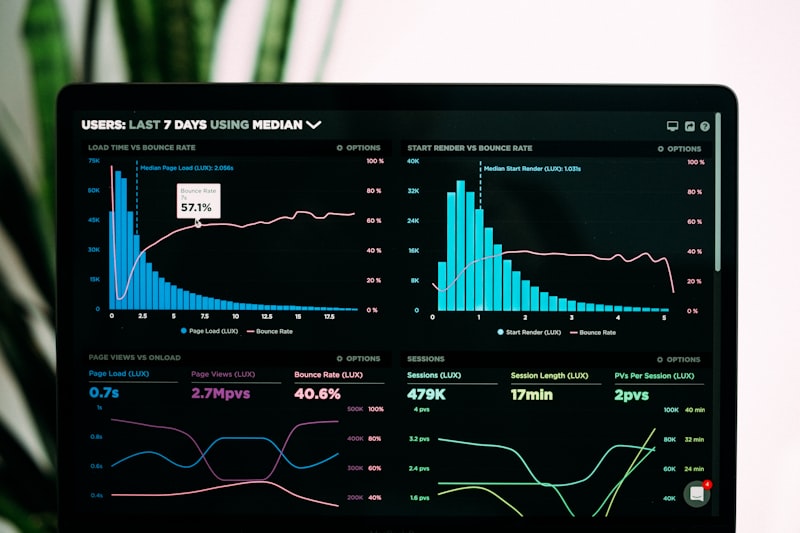
Feature Categories for On Demand Apps
Every on demand platform serves three user types. Here are the essential features for each, organized by priority.
User Registration & Authentication
The gateway to your app must be fast and frictionless — users should register in under 30 seconds. Essential methods include email and password, phone number with OTP verification, and social login via Google, Apple, and Facebook. Biometric login with fingerprint and face ID for returning users eliminates password friction. Two-factor authentication adds security for sensitive operations like payments. Profile management lets users update personal info, saved addresses, payment methods, and notification preferences from a single screen.
Search, Filters & Discovery
Users must find what they need in seconds. Smart search with autocomplete, spelling correction, and synonym matching ensures relevant results even with imperfect queries. Category browsing with visual icons provides an alternative discovery path. Filters for price range, rating, distance, availability, and service-specific criteria like cuisine type or service category narrow results efficiently. Location-based discovery shows nearby options first with distance and ETA. Recent searches and saved favorites accelerate repeat usage. Search quality directly correlates with conversion rate.
Real-Time GPS Tracking
The feature that defines on demand apps — customers see their provider or driver approaching in real time on an interactive map. Location updates every 5 to 10 seconds provide smooth animations and accurate ETA countdown. Push notifications at key milestones — order confirmed, provider en route, provider arriving, service completed — keep customers informed without opening the app. For delivery apps, tracking shows the complete journey from store to doorstep. For service apps, tracking shows when the provider will arrive. This feature alone reduces customer support inquiries by 70 percent.
Payment & Wallet System
Multiple payment options maximize checkout conversion — credit and debit cards, digital wallets like Apple Pay and Google Pay, cash on delivery for cash-preferred markets, and in-app wallet for faster repeat checkout. Saved card tokenization enables one-tap payments for returning customers. Split payment logic automatically distributes commissions between the platform and providers. Tipping functionality lets customers reward great service. Promo codes and wallet credits integrate seamlessly into the checkout flow. PCI DSS compliance ensures payment data security.
Communication Suite
In-app chat connects customers with providers for coordination without sharing personal contact information. Masked phone calling lets users speak directly when chat is insufficient — phone numbers are never revealed. Push notifications serve as the primary communication channel for order updates, promotional offers, and re-engagement campaigns. SMS notifications provide a fallback for critical alerts when push notifications fail. Email notifications handle receipts, account updates, and marketing communications. The communication stack is the nervous system of your on demand platform.
Rating & Review Engine
Trust between strangers is the foundation of marketplace success. After each service, customers rate their experience on a 5-star scale with optional text reviews and photo uploads. Providers rate customers to flag problematic users. Aggregate ratings are displayed prominently on profiles and influence search ranking — top-rated providers appear first. The rating system creates accountability that drives service quality improvement over time. Admin moderation tools handle fake reviews, and automated alerts flag providers whose ratings drop below acceptable thresholds for intervention.
Admin Analytics & Dashboard
The admin panel is your business command center. Real-time dashboards show active orders, online providers, revenue in progress, and platform health metrics. Historical analytics track daily, weekly, and monthly trends for orders, revenue, new users, provider utilization, and customer satisfaction. Financial reporting covers commissions earned, provider payouts, refunds processed, and promotional spend. User management lets you view profiles, handle disputes, and manage provider approvals. Zone management defines service areas with custom boundaries, pricing, and availability rules.
Advanced AI & ML Features
AI-powered features that give you a competitive edge: smart dispatch algorithms that assign the optimal provider considering proximity, rating, workload, and predicted completion time — reducing wait times by 25 percent. Dynamic pricing that adjusts rates based on real-time demand and supply patterns. Personalized recommendations that suggest services based on user behavior, increasing cross-selling by 30 percent. Demand forecasting that predicts high-demand zones and times, enabling proactive provider positioning. Chatbot support handling 40 to 60 percent of common queries without human intervention.
Customer App Features Deep Dive
Onboarding & Profile: Social login, phone OTP, profile management, saved addresses (home, work, other), saved payment methods, notification preferences, language selection. Discovery: Location-based search, category browsing, smart filters, recent and trending, favorites and bookmarks, personalized recommendations. Booking & Ordering: Service selection, customization options, scheduling for future dates, group ordering, repeat and reorder, minimum order alerts, promo code application at checkout.
Tracking & Communication: Real-time GPS map, ETA countdown, push notifications at milestones, in-app chat with provider, masked phone calls, trip or order sharing with contacts, SOS emergency button. Payment: Multiple payment methods, in-app wallet, saved cards, split payments, tipping, digital receipts, invoice download. Engagement: Ratings and reviews with photos, referral program, loyalty points, subscription plans, push notification opt-in for deals, wishlist or favorites.
Post-Service: Order history with full detail, receipt access, reorder with one tap, dispute filing, customer support chat, feedback forms. These features collectively create an experience that rivals or exceeds what Uber, DoorDash, and Airbnb offer — the difference is execution quality and how well each feature is optimized for your specific vertical and market.

MVP vs Full Feature Set — What to Build First
- MVP (8-10 features): Registration, search, booking, one payment method, basic tracking, push notifications, provider app, basic admin — enough to launch and validate
- Phase 2 (+5-8 features): Ratings and reviews, promo codes, referral program, multiple payment methods, order history — drives repeat usage
- Phase 3 (+5-8 features): Loyalty program, subscription plans, scheduled bookings, in-app chat, advanced filters — increases retention and LTV
- Phase 4 (+5-8 features): AI dispatch, dynamic pricing, multi-language, personalized recommendations — maximizes efficiency and revenue
- Phase 5 (+5-8 features): Multi-region, new service verticals, enterprise features, API marketplace — scale and dominate
- Build what users ask for: After MVP, let real usage data and customer feedback guide your feature roadmap — not assumptions
How to Scope Your Feature List — 5 Steps
Analyze Competitors
Download and test 5 to 10 competitor apps in your market. Document every feature they offer, identify their strengths and weaknesses, and note what users complain about in app store reviews. This competitive analysis reveals the table-stakes features your app must have and the gaps you can exploit for differentiation.
Define Core User Flows
Map the primary journey for each user type — customer booking flow, provider job acceptance flow, and admin management flow. Every feature should support one of these core journeys. Features that do not directly help users complete their primary task should be deferred to later phases.
Prioritize with MoSCoW
Categorize every feature as Must Have (cannot launch without), Should Have (important but not blocking), Could Have (nice to have if budget allows), or Won't Have (explicitly deferred). Must Have features become your MVP scope. This framework prevents scope creep and ensures you invest your budget where it matters most.
Get Expert Validation
Share your feature list with our team for validation. With 900 plus on demand apps built, we can identify features you may have missed that are critical for your specific vertical, and flag features you have prioritized too highly that rarely drive user value. This 30-minute review can save you thousands in misallocated development budget.
Plan Phased Delivery
Organize your features into delivery phases aligned with business milestones — MVP for launch and validation, Phase 2 for engagement and retention, Phase 3 for growth and monetization, Phase 4 for scale and optimization. Each phase has clear success metrics that determine when to proceed to the next phase. This approach maximizes ROI by ensuring you only build what users actually value.
Frequently Asked Questions About On Demand App Features
The absolute must-have features for any on demand app are: user registration with social login, service or product search with filters, booking or ordering flow, real-time GPS tracking, at least one payment method like Stripe, push notifications for order updates, a provider or driver app for accepting jobs, and a basic admin panel. These 8 features form the minimum viable feature set that lets you launch, acquire users, and validate your business model. Everything else can be added in post-launch phases.
A comprehensive customer app should include quick registration with social login and OTP, smart search with filters and categories, real-time provider or driver tracking on map, multiple payment methods including cards, wallets, and COD, push notifications for order lifecycle, ratings and reviews after service completion, order or ride history with receipts, saved addresses and payment methods for repeat ordering, promo code and referral rewards, in-app chat and masked calling with providers, favorites or bookmarks for frequently ordered items, and scheduled bookings for future services.
The provider app must include online or offline availability toggle, incoming job alerts with accept and reject, turn-by-turn navigation to customer location, job completion confirmation with proof of service, daily and weekly earnings dashboard with trip-level detail, payout tracking and bank account management, performance metrics showing acceptance rate and customer ratings, document management for license and insurance uploads, in-app communication with customers, and job history with earnings per service. For multi-service platforms, the app should support multiple skill registrations.
The admin panel needs user and provider management with approval workflows, real-time order monitoring with live map view, commission and pricing configuration per service type, promotional campaign management with code generation, analytics dashboard showing revenue, orders, users, and growth trends, financial reporting with payout management, push notification campaign sender, content management for app banners and announcements, dispute resolution tools, and zone or region management with geo-boundaries. Advanced admin features include role-based access control, automated reporting, and BI tool integration.
The features that most impact retention are: loyalty programs with points, tiers, and rewards that increase switching costs, subscription plans offering benefits like free delivery for monthly fees, personalized recommendations based on order history, scheduled and recurring bookings for routine services, referral programs that reward both referrer and referee, push notification campaigns targeting inactive users with personalized offers, and one-tap reordering from order history. Apps with loyalty programs see 25 percent higher repeat rates, and subscription users have 3 to 4x higher lifetime value.
Always build in phases. Launch with the MVP feature set of 8 to 10 core features, validate with real users, then add features based on what your data shows drives retention and revenue. Building all features at once wastes 40 to 60 percent of your budget on features users may not value. The MVP-first approach lets you invest in the features that matter most to your specific audience. Our recommended phased approach: Phase 1 MVP, Phase 2 engagement features like reviews and promos, Phase 3 retention features like loyalty and subscriptions, Phase 4 growth features like AI recommendations and multi-language.
Multi-sided marketplace apps require features that serve three distinct user types simultaneously. The customer side needs discovery, booking, and payment. The provider side needs job management, earnings tracking, and schedule control. The admin side needs tools to manage both sides, set rules, and resolve disputes. Additionally, you need dispatch or matching algorithms that connect customers with the right providers, commission splitting that automatically distributes payments, and rating systems that build trust between strangers. The complexity of managing three user experiences is what makes on demand apps technically challenging.
The most impactful AI and ML features for on demand apps are: smart dispatch algorithms that assign the optimal provider based on proximity, availability, ratings, and predicted completion time. Dynamic surge pricing that adjusts prices based on real-time demand and supply. Personalized recommendations that suggest services based on user behavior patterns. Demand forecasting that helps you position providers in high-demand areas before orders come in. And chatbot support that handles common customer queries automatically, reducing support ticket volume by 40 to 60 percent.
Need Help Scoping Features for Your On Demand App?
Get a free feature scoping session — our team will help you identify the must-have features for your specific vertical and create a phased delivery plan optimized for your budget.